If you were forced to sit in a high school English class anytime in the last seventy years, you probably met John Proctor. He’s the guy screaming about his name in a damp jail cell while everyone else in Salem has seemingly lost their minds. On paper, John Proctor in The Crucible is a simple farmer. In reality, he’s one of the most agonizingly human characters ever written for the stage.
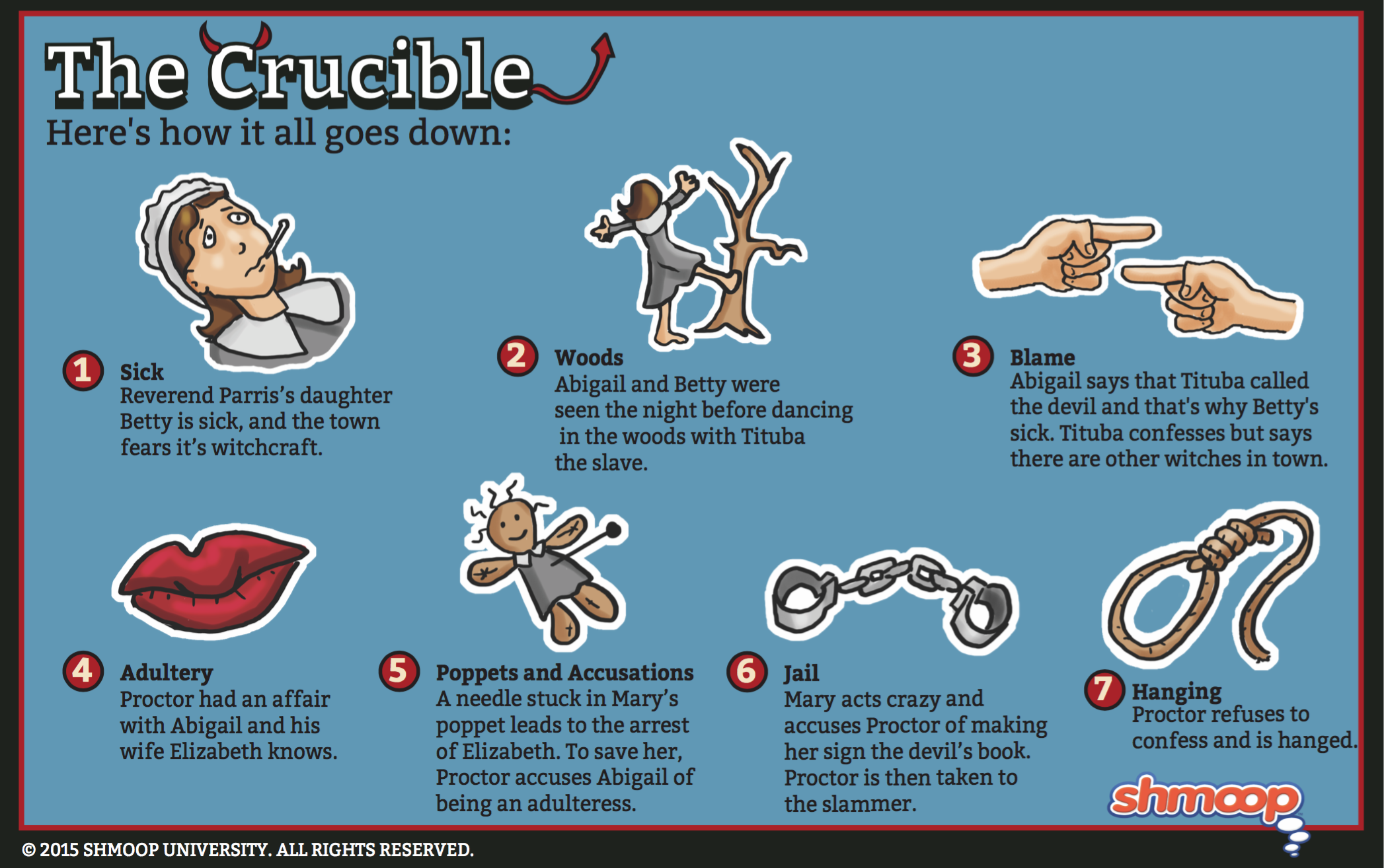
Arthur Miller didn’t write a saint. He wrote a man who was kind of a mess. Proctor is a local powerhouse with a sharp tongue and a low tolerance for the local minister, Reverend Parris, whom he basically considers a greedy hack. But Proctor has a secret that’s eating him alive. He’s an adulterer. He had an affair with Abigail Williams, a girl who worked in his house, and that single mistake effectively lights the fuse for the entire Salem witch trials.
The Man vs. The Myth: What Really Happened?
Most people assume The Crucible is a straight historical documentary. It isn't. Honestly, Miller took some massive creative liberties to make the drama hit harder. In the play, John Proctor is a rugged 30-something. In real life? The historical John Proctor was 60 years old.
That changes the vibe completely.
The real Proctor wasn’t just a farmer; he ran a tavern. He was a grandfather. Abigail Williams, his supposed lover in the play, was actually only 11 or 12 years old in 1692. There is zero historical evidence they had an affair. Miller aged Abigail up to 17 to create a "sexual heat" that could explain the madness of the trials. It worked for the stage, but it's worth remembering that the "real" Proctor was an elderly man who was mostly targeted because he publicly called the accusers liars and frauds.
He didn't go to the gallows for a "name" in the same poetic way the play suggests. He went because he was a victim of a legal system that had completely collapsed into paranoia.
Why John Proctor Is the Ultimate Tragic Hero
Miller used Proctor to explore what happens when a private sin becomes a public weapon. At the start of the play, Proctor is trying to ignore the chaos. He’s got "lumber to drag home" and crops to sow. He wants no part of the town’s religious hysteria. But he can’t stay out of it once his wife, Elizabeth, is targeted.
His journey is basically a slow-motion car crash of integrity.
- The Silence: He knows Abigail is faking it, but he’s afraid to speak up because she might expose their affair.
- The Sacrifice: He finally confesses to "lechery" (adultery) in open court to prove Abigail has a motive to lie. It’s a huge moment. He trashes his reputation to save his wife.
- The Test: He is offered a way out. All he has to do is sign a piece of paper admitting he’s a witch.
This is where the "name" thing comes in. Proctor almost signs it. He wants to live. He wants to see his kids grow up. But when he realizes the court is going to nail his confession to the church door to use his "good name" to justify hanging other innocent people, he snaps.
"Because it is my name! Because I cannot have another in my life! Because I lie and sign myself to lies!"
That line is the heart of the play. It’s not just about ego. It’s about the fact that if he gives up his soul to save his skin, he won't have a life worth living anyway.
The McCarthyism Connection
You can’t talk about John Proctor in The Crucible without talking about the 1950s. Arthur Miller wrote this play during the "Red Scare." Senator Joseph McCarthy was hunting for Communists in Hollywood and Washington, and the tactics were identical to Salem.
If you were accused of being a Communist, the only way to save your career was to "name names." You had to point the finger at your friends. Miller himself was called before the House Un-American Activities Committee (HUAC) in 1956. Like Proctor, he refused to name others. He was convicted of contempt of Congress (though it was later overturned).
When you watch Proctor refuse to sign that confession, you’re watching Miller refuse to betray his friends. It’s a protest play disguised as a historical drama.
Common Misconceptions About Proctor
People often walk away from the play thinking Elizabeth Proctor is cold or that John is a purely "good" man who just made one mistake. That’s a bit of a reach.
Proctor is a hothead. He threatens to whip his servant, Mary Warren. He’s harsh with Elizabeth because he’s frustrated that she won't just "forget" his affair, even though it only happened seven months ago. He’s also a bit of a hypocrite at the start, judging others for their lack of piety while he’s hiding a Commandment-breaking secret in his own closet.
His "goodness" isn't something he starts with. It's something he has to earn through suffering. By the end, when Elizabeth says, "He have his goodness now," she’s acknowledging that he finally stopped fighting himself and stood for something real.
Actionable Insights: Lessons from Salem
Looking at John Proctor’s story today, it’s easy to think "well, we don't hang witches anymore." True. But the "cancel culture" or "mob mentality" of the digital age isn't that far off from the village of Salem.
- Protect your integrity: Reputation is what people think of you; integrity is who you actually are. Proctor realized at the end that integrity is the only thing you actually take to the grave.
- Question the "accuser": In the play, the court assumes the "victims" (the girls) are always telling the truth. History—and Proctor—show us that sometimes the people shouting the loudest are the ones with the most to hide.
- Silence is a choice: Proctor’s delay in speaking up about Abigail allowed the fire to get out of control. If you see something wrong, waiting for the "perfect time" to speak usually means you’ve waited too long.
If you’re studying this for a class or just interested in the history, the best next step is to look up the "Petition of John Proctor." It’s the actual letter the real Proctor wrote from jail in 1692, asking the ministers of Boston to step in. It’s heartbreaking, it's real, and it shows the man behind the myth.
Read the primary sources from the Salem Witch Trials (like the Records of the Salem Witchcraft) to see how Miller wove real testimony into his dialogue. Comparing the trial transcripts to the play’s script will give you a much deeper understanding of how "hysteria" is manufactured by the language we use in courtrooms and on social media.